Splicing, in the simplest terms, is the process of joining two or more pieces of material together. It's a technique used in a wide range of industries, from textiles to electronics. But did you know that splicing also has a fascinating connection to evolution? As a splicing supplier, I've had the opportunity to explore this connection in depth, and I'm excited to share my insights with you.
Let's start by looking at splicing from a biological perspective. In genetics, splicing is a crucial step in the process of gene expression. After DNA is transcribed into RNA, the RNA molecule often contains non - coding regions called introns. Splicing is the process by which these introns are removed, and the remaining coding regions, called exons, are joined together to form a mature messenger RNA (mRNA) molecule. This mRNA can then be translated into a protein.
This biological splicing process is incredibly important for evolution. It allows a single gene to code for multiple proteins through a mechanism called alternative splicing. Alternative splicing means that different combinations of exons can be joined together, resulting in different mRNA transcripts and ultimately different proteins. This greatly increases the complexity and diversity of the proteome, which is the entire set of proteins expressed by a cell, tissue, or organism.
Think about it this way: if each gene could only code for one protein, the number of proteins an organism could produce would be severely limited. But with alternative splicing, a relatively small number of genes can give rise to a vast array of proteins. This increased protein diversity provides more raw material for natural selection to act upon. Organisms with more diverse proteins may be better able to adapt to changing environments, resist diseases, and perform new functions.
For example, in humans, alternative splicing is thought to play a role in the development of the nervous system. Different splicing patterns in genes related to nerve cell function can lead to the formation of unique neural circuits, which are essential for complex behaviors and cognitive abilities. This ability to generate diverse neural structures through splicing may have been a key factor in the evolution of the human brain.
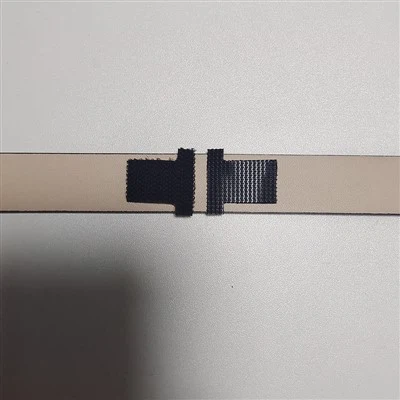
Now, let's shift our focus to industrial splicing. As a splicing supplier, I deal with a variety of materials and industries. Splicing in manufacturing is all about creating seamless connections between materials, whether it's paper, plastic, or metal. This process is essential for producing products with consistent quality and performance.
Just like in biology, industrial splicing also contributes to the "evolution" of products. In the manufacturing world, products are constantly evolving to meet new customer demands and market trends. Splicing technology allows manufacturers to improve product design, increase efficiency, and reduce costs.


For instance, in the packaging industry, splicing is used to create continuous rolls of packaging material. This enables high - speed production lines to run smoothly, reducing downtime and increasing productivity. Over time, as splicing techniques have improved, packaging products have become more durable, lightweight, and environmentally friendly. These improvements are similar to the way organisms adapt and evolve to better fit their "environment," in this case, the market.
In addition to its role in product evolution, industrial splicing also has connections to other converting processes. Take Laminating for example. Laminating involves bonding two or more layers of material together, often using an adhesive. Splicing can be used to prepare the materials for lamination, ensuring a smooth and seamless transition between layers. This combination of splicing and laminating can create products with enhanced properties, such as increased strength or improved barrier performance.
Coating is another important converting process. Coating involves applying a thin layer of material to a substrate to provide additional functionality, such as water resistance or UV protection. Splicing can be used to join the coated materials together, allowing for the production of larger and more complex coated products.
Perforating is yet another process where splicing plays a role. Perforating creates small holes in a material, which can be used for ventilation, easy tearing, or other purposes. Splicing can be used to connect perforated materials, enabling the production of continuous rolls or sheets with consistent perforation patterns.
The synergy between splicing and these other converting processes is what drives innovation in the manufacturing industry. Just as in biology, where different biological processes work together to support the survival and evolution of organisms, in manufacturing, different processes like splicing, laminating, coating, and perforating work in harmony to create better products.
As a splicing supplier, I'm constantly looking for ways to improve our splicing techniques and offer better solutions to our customers. We invest in research and development to stay ahead of the curve and provide the latest splicing technologies. Whether it's developing new adhesives for stronger bonds or improving the precision of splicing equipment, our goal is to help our customers create products that are at the forefront of their industries.
If you're in the manufacturing industry and looking to take your products to the next level, I encourage you to consider the benefits of splicing. Whether you need to improve the performance of your products, increase production efficiency, or explore new design possibilities, splicing can be a game - changer.
I'd love to have a conversation with you about how our splicing solutions can meet your specific needs. Whether you're a small - scale manufacturer or a large - scale enterprise, we have the expertise and resources to help you succeed. Don't hesitate to reach out and start a discussion about how we can work together to drive the evolution of your products.
References
- Alberts, B., Johnson, A., Lewis, J., Raff, M., Roberts, K., & Walter, P. (2002). Molecular Biology of the Cell. Garland Science.
- Lodish, H., Berk, A., Matsudaira, P., Kaiser, C. A., Krieger, M., Scott, M. P., … & Darnell, J. (2004). Molecular Cell Biology. W. H. Freeman.